
0 Comments »
undefined
undefined
Manananggal
Posted in M
 The Manananggal (sometimes confused with theWak Wak in some areas by the Filipinos) were called Penanggalan in Malay folklore is a mythical creature of the Philippines. It resembles a Westernvampire, in being an evil, human-devouringmonster or witch. The myth of the manananggal is popular in the Visayan region of the Philippines, especially in the western provinces of Capiz, Iloilo,Antique. There are varying accounts of the features of a manananggal. Like vampires, Visayan folklore creatures, and aswangs, manananggals are also said to abhor garlic and salt.They were also known to avoid daggers, light, vinegar, spices and the tail of a sting ray which can be fashioned as a whip. Folklore of similar creatures can be found in the neighbouring nations of Indonesia and Malaysia.
undefined
undefined
Maltese tiger
Posted in M
 The Maltese tiger, or blue tiger, is a suspectedcoloration morph of a tiger, reported mostly from the Fujian Province of China. It is said to have bluish fur with dark grey stripes. The term "Maltese" comes from domestic cat terminology for blue fur, and refers to the slate grey coloration. Many cats with such colouration are present inMalta, which may have given rise to the use of the adjective in this context; however the tigers have nothing to do with the island.
Most of the Maltese tigers reported have been of the South Chinese subspecies. The South Chinese tiger today is critically endangered, and the "blue" alleles may be wholly extinct. However, "blue" tigers have also been reported from Korea, home ofAmur tigers.
undefined
undefined
Phaya Naga
Posted in P
undefined
undefined
Poukai
Posted in P

According to an account given to Sir George Grey, an early governor of New Zealand, Hokioi were huge black-and-white predators with a red crest and yellow-green tinged wingtips.
In some Māori legends, Hokioi kill humans, which could have been possible if the name relates to theHaast's Eagle, given the massive size and strength of the bird which is believed to have hunted Moaweighing up to 300 pounds (140 kg). Such a creature could have very well killed and eaten humans, and it did not become extinct until several hundred years after the arrival of the Māori.
A different theory posits that the "Hokioi" legends may refer to the New Zealand Snipe – specifically, the extinct South Island subspecies
undefined
undefined
Popobawa
Posted in P
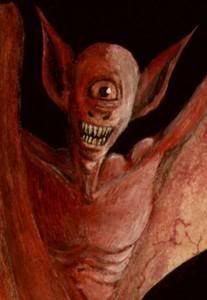 Popobawa, also Popo Bawa, is the name of an evil spirit, orshetani,[1] which is believed by residents to have first appeared on the Tanzanian island of Pemba. In 1995 it was the focus of a major outbreak of mass hysteria or panicwhich spread from Pemba to Unguja, the main island of theZanzibar archipelago, and across to Dar es Salaam and other urban centres on the East African coast.
undefined
undefined
Pogeyan
Posted in P

The name "Pogeyan" is derived from the local dialect and means "The cat that comes and goes like the mist"
